1
Warranty coverage
The defect arose while a written manufacturer or certified pre-owned warranty covered the vehicle, even if that warranty has since expired.
Cadillac vehicles combine complex powertrains with dense electronic, display, and driver-assistance systems. When a luxury SUV repeatedly loses propulsion, blanks a screen, misreports a safety warning, or stays at the dealer for engine and restraint work, the repair chronology—not the price or prestige of the vehicle—drives the warranty analysis.
$0 out of pocket under our written representation terms · when you win, the manufacturer pays the legal fees · no obligation
A Cadillac owner may have a claim when a substantial covered defect began during written-warranty coverage and GM could not correct it within a reasonable opportunity. Lion Legal, P.C. evaluates federal Magnuson-Moss matters nationwide and associates local counsel where a state lemon law may provide additional relief.
Free 60-second check · $0 out of pocket · no obligation.
Eligibility signals
Warranty claims depend on the repair history and the law that applies—not on a model name or a recall alone. These are the facts that usually matter first.
The defect arose while a written manufacturer or certified pre-owned warranty covered the vehicle, even if that warranty has since expired.
An authorized service center had a reasonable opportunity to repair the same concern, or your Cadillac spent substantial time unavailable for warranty work.
The unresolved problem materially affects the vehicle’s use, value, or safety. State definitions and required repair opportunities vary.
What happens next
You share the records. A lawyer evaluates the warranty history. Then you get a plain-English explanation of the paths that may be available.
Tell us the year, model, recurring symptom, shop visits, and days your Cadillac was unavailable.
Lion Legal, P.C. evaluates the federal Magnuson-Moss claim and associates local counsel when another state’s lemon law applies.
Depending on the law and facts, we may pursue a refund, replacement, or cash-and-keep settlement. No outcome is guaranteed.
What owners report and repair
Depending on model year, trim, and powertrain, these issue categories have been documented in public NHTSA records and manufacturer safety campaigns. They do not mean every Cadillac has a defect, and a recall by itself does not establish a lemon-law claim.
Cadillac safety records include V8 internal-engine damage, fuel-pump interruptions, and other conditions that can cause a stall or loss of power in particular vehicles and configurations.
Incorrect transmission parts, control-valve faults, driveshaft heat treatment, and half-shaft attachment issues can produce harsh operation, loss of drive, or wheel lock.
LYRIQ records include battery connection or attachment concerns, rear-drive-unit insulation, and software conditions that can interrupt propulsion or affect protected high-voltage components.
Electronic brake control, unexpected ABS behavior, loose suspension hardware, steering resistance, and wheel or transfer-case conditions require precise configuration and symptom records.
Instrument panels, driver displays, Surround Vision cameras, and rearview images may fail through software, module, cable, or connector defects. A restart is not the same as a lasting repair.
Cadillac campaigns have addressed airbag deployment paths and cushions, warning logic, third-row belt hardware, rear anchorage welds, and head-restraint retention.
Improper windshield bonding, lighting-control software, dashboard construction, and loose exterior or chassis hardware can affect visibility, crash performance, and dependable use.
Choose your vehicle
Each model guide focuses on a different repair pattern, the records worth saving, and questions owners commonly ask.
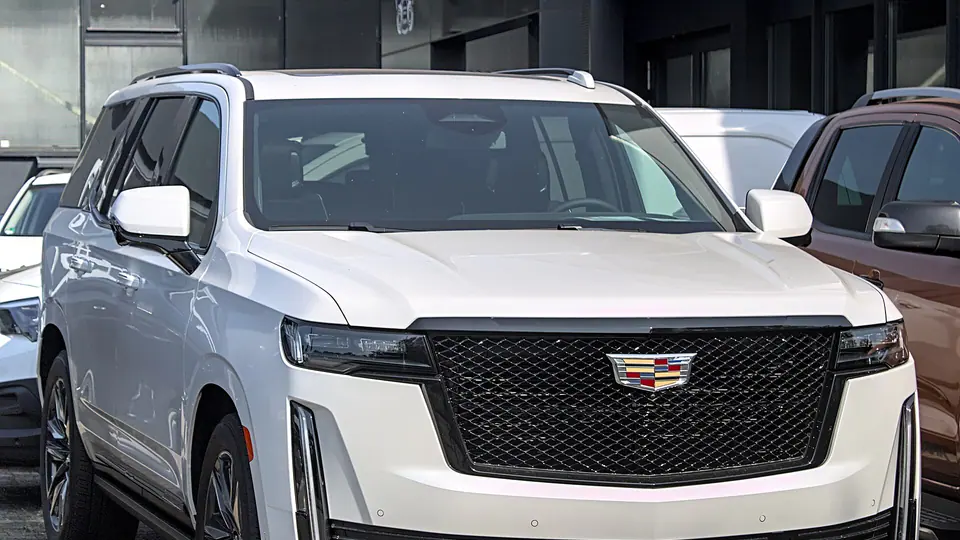
An Escalade may qualify when a covered engine, driveline, braking, electrical, or restraint defect remains substantial after reasonable GM repair attempts or creates significant downtime. Recall inclusion may support the investigation, but it neither proves nor is required for a claim.
View Escalade guide →
An XT4 may support a Magnuson-Moss claim if GM was given reasonable opportunities to repair a substantial defect covered by a written warranty. The number of visits is only one factor; the severity, cumulative downtime, first repair date, and state-specific rules also matter.
View XT4 guide →
A covered XT5 defect may justify relief when it materially impairs the crossover and persists after reasonable GM repair opportunities or extended downtime. A safety campaign can inform the review, but the owner's repair orders and warranty coverage remain central.
View XT5 guide →
A LYRIQ may support a federal warranty claim when a substantial covered EV, braking, display, suspension, or restraint condition remains after reasonable Cadillac repair opportunities. Over-the-air or dealer software work can be relevant, but it must be connected to the reported defect and tested for recurrence.
View LYRIQ guide →
Federal + state protection
Stop Lemons is an advertising name of Lion Legal, P.C.. Its attorneys are licensed in California and represent consumers nationwide on federal warranty claims under the Magnuson-Moss Warranty Act. Where another state’s lemon law governs, the firm associates local counsel licensed there.
Under 15 U.S.C. § 2310(d)(2), a prevailing consumer may recover reasonable attorney’s fees. That fee-shifting structure supports our $0-out-of-pocket representation. Federal recoveries are commonly cash settlements; buybacks and replacements depend on state law, the manufacturer, and the facts, and are not guaranteed.
Common questions
The legal foundation may be similar, but the evidence differs. A LYRIQ file may center on high-voltage alerts, charging and software logs, while an Escalade file may require oil, engine, fuel, and transmission records. Each claim should identify the actual powertrain and written warranty involved.
They can be relevant when GM prescribed an update to correct the reported defect. Save the repair order, calibration number, update date, and proof of recurrence. A service visit labeled only as programming still belongs in the chronology.
Ask the dealer to quote your exact complaint and its conclusion in writing. Photos, videos, codes, another dealer's diagnosis, and comparison with the owner's manual can help distinguish intended behavior from an intermittent defect that was not reproduced.
Potentially. Coverage depends on the written warranty in effect when the defect was presented, the transaction, and governing state law. Keep the lease or purchase contract, certification terms, warranty booklet, and all GM repair records.
The facts and law may support cash-and-keep compensation, a refund, or a replacement, but none is guaranteed. Federal Magnuson-Moss matters commonly seek a cash resolution. Qualifying clients generally pay $0 out of pocket under written contingency terms, and a prevailing consumer may recover reasonable fees from the manufacturer.
Tell us what happened and get a free review of the warranty and repair history. No obligation, and no out-of-pocket fees under our written representation terms.